


Curtain length is one of the most overlooked details in home decor, yet it’s actually one of the most important factors in making a room look tidy or cluttered. Are you buying new curtains, or are you simply not happy with the style of your current ones? Whether you decide to buy new curtains or use your existing ones effectively, there’s a question we all need to consider: Should curtains touch the floor or not?
The secret to those beautiful rooms you see online or in publications is frequently the proper curtain length. This article will go over the details of curtain length, styles, and how to choose the right curtains for your home
.
Are curtains supposed to touch the floor?
Yes, curtains should generally touch the floor or at least be very close to it. However, this does not mean that curtains must pile up on the floor in every case. The correct curtain length, measured from your window, should reflect a conscious choice at the point where it meets the floor.
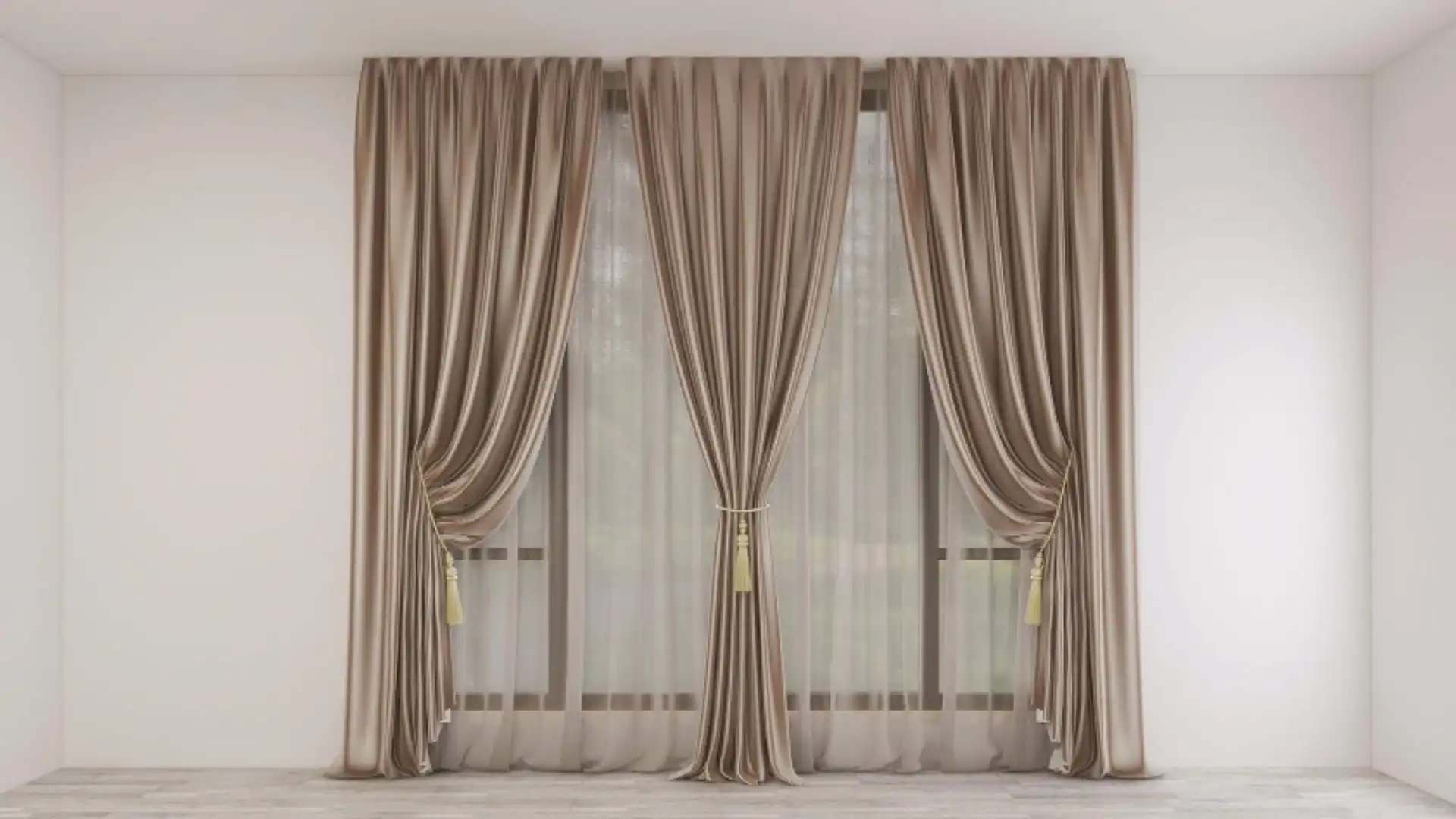
Leaving them 0.5“ (1.3 cm) above the floor for a modern and tidy look, or allowing them to pile up at least 5” (12.5 cm) on the floor for a luxurious and romantic look, are the most common approaches. Short curtains visually divide the wall and can make the space appear smaller than it is.
Main curtain length styles in Dallas, Texas
Float length curtains
This style refers to the curtain length where the curtain does not touch the floor, typically ending 1/2 inch to 1 inch (1.5 cm – 2.5 cm) above the floor. It is suitable for the following spaces:
The main length styles and measurements you can choose from:
Slightly above the floor (Floating)
This style offers a modern, neat, and very practical look.
Measurement: The bottom edge of the curtain ends approximately 0.5“ (1.25 cm) to 1” (2.5 cm) above the floor.
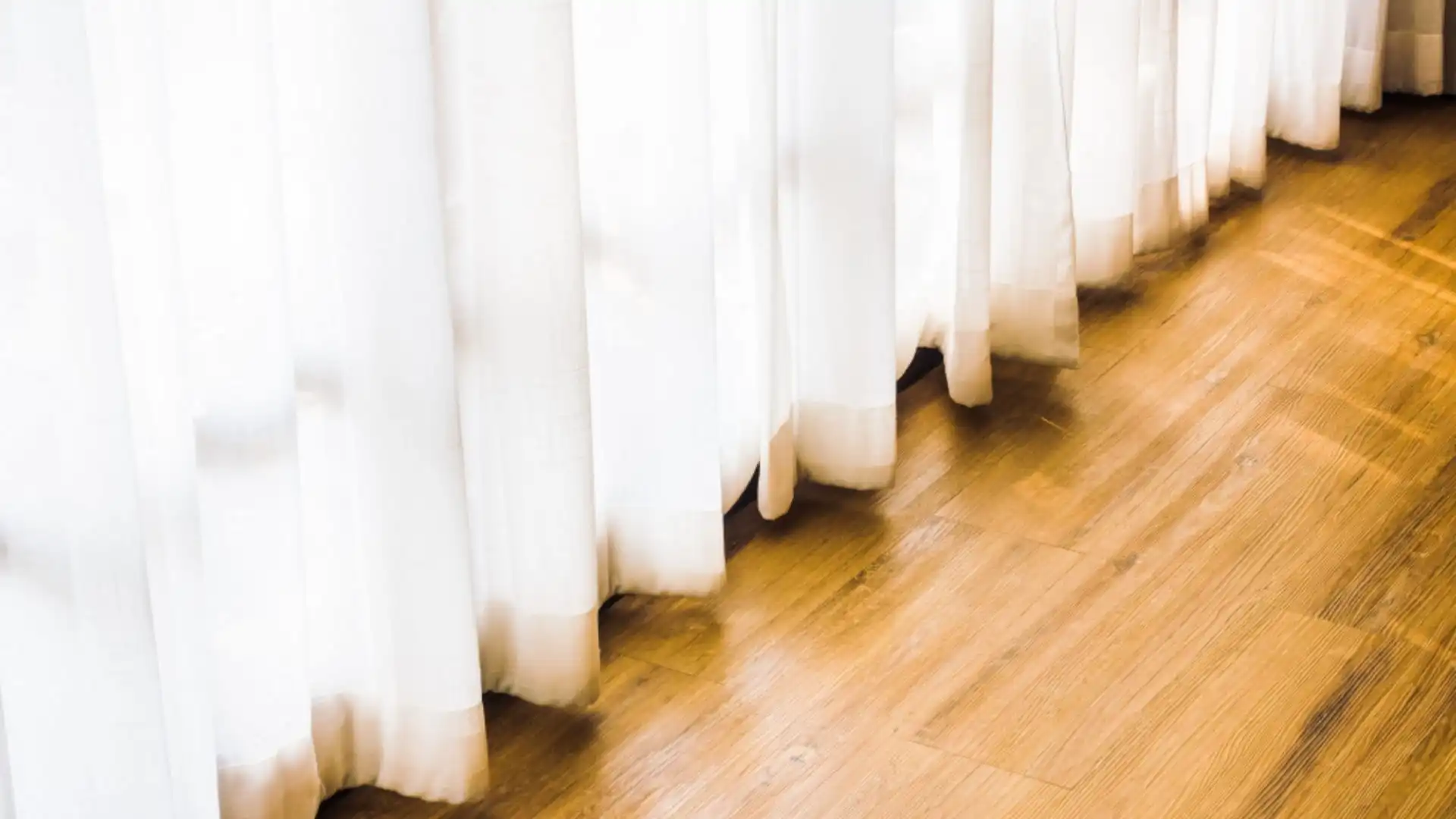
Purpose: Facilitates cleaning (sweeping and vacuuming) and prevents the bottom of the curtain from getting dirty or worn. Ideal for sharp-lined modern curtains such as S-Fold (Wave).
Touching the floor (touching/kissing)
This is the “designer” choice, providing a classic and professional finish where the curtain lightly sweeps the floor.
Measurement: The curtain ends exactly at floor level.
Purpose: Provides a stylish and neat appearance for living rooms and bedrooms. It pairs exceptionally well with linen-blend fabrics.
Light break (Breaking)
This style is characterized by a slight fold in the fabric at the hem, also known as a “trouser break.”
Measurement: Approximately 0.5“ (1.25 cm) to 1” (2.5 cm) of extra fabric is added to the floor measurement.
Purpose: A safe choice when you are unsure of the exact floor measurement; it is both stylish and hides slight unevenness in the floor.
Puddling/Pooling
Allows the fabric to gather on the floor to create a luxurious, romantic, and dramatic look.
Standard puddling: The amount of fabric draped on the floor is between 2“ (5 cm) and 4” (10 cm).
Full/dramatic puddling: For a richer look, add 5“ (12.5 cm) to 8” (20 cm) or more. In some luxury decor, this amount can exceed 10″ (25 cm).
Intended use: Best for media rooms or romantic beach villas with thick textiles like velvet.
Installation and measurements for visual cues:
Height perception: To make the ceiling look higher, hang the curtain rod 4″ (10 cm) or more above the window frame, or even only 1″ (2.5 cm) to 2″ (5 cm) below the ceiling.
Width: The curtain rod should stick out at least 6″ (15 cm) to 8″ (20 cm) on each side of the window frame. This will keep the curtains from blocking the window when they are open and let in more light.
Break length curtains
The “Break” or “Trouser Break” style of curtain is a classy way to end a curtain that touches the floor and folds somewhat. This method makes sure that the curtain sits exactly on the floor, giving it a sleek and professional “designer” aspect. But it’s best to use this method on curtains that don’t get opened and closed all the time, because that will keep the bottom parts from getting dirty faster. This length is especially good for linen, cotton, or lightweight curtains since it looks good and is useful.
The sizes for this model are:
Light break: The curtain is about 0.5″ (1.5 cm) longer than the place where it hits the floor.
Standard break (trouser break): To get this look, which is also known as “break” or “trouser break,” a length (puddle) of 1″ (2.5 cm) is added above the floor level.
Curtains that are long enough to make a puddle
Depending on how dramatic and luxurious you want the look to be, below are the best sizes for puddle-length curtains (curtains that pool on the floor):
Break/trouser break: This is done by adding around 1″ (2.5 cm) or 0.5″ (1.5 cm) after the curtain has fully reached the floor. This style lets the fabric break a little bit on the floor.
Standard puddle: This is made by adding around 2″ (5 cm) to 4″ (10 cm) of excess cloth to the measurement that reaches the floor.
True puddle: To have the cloth spread out further on the floor, add around 5″ (12.5 cm) to 8″ (20 cm) of extra length.
Dramatic/luxury drape: For a considerably more flashy and luxurious look, add around 8″ (20 cm) or 10″ (25 cm) extra.
Use and choice of fabric:
Floor-length curtains shouldn’t be used on windows that are opened and closed often since the bottom parts could get soiled rapidly.
• This design is best for making a romantic and rich space, especially with heavier textiles like velvet or soft draping fabrics like linen.
• You should only use the pleat style with light fabrics on hand-drawn curtain rails.
When should it be chosen?
• Living rooms that are flashy and reception areas
• To make bedrooms feel like a high-end hotel
• With rich drapes, silk, or velvet fabrics
• In styles of décor that are romantic, baroque, or traditional.
Which curtain length looks best?
The “best” length for curtains depends on the style and use of the room. However, professional designers usually suggest staying away from short curtains that visually divide the wall and make the room look smaller. Instead, they suggest curtains that reach the floor or droop gently over it.

Ways to make the visual impression better:
• For modern and minimalist homes, the finest curtains are those that hang down to the floor.
• For classic and traditional homes, puddle-length curtains give the room a rich look.
• Bohemian and laid-back decor: Styles that are both light and a little bit gathered make the room feel calm.
• Useful living spaces: Float curtains make the area more useful.
• But if you want a dramatic look and a high-end sense, you should maintain the curtains long enough to touch the floor.
Factors to consider when choosing curtain length
Choosing the right length for your curtains is one of the most important things you can do to change the appearance of a room, make the ceiling look higher, and make the space more useful.
The look and style you want to make
The lengths of your curtains, how high they are mounted, and how full they are all have a direct impact on the mood of the room.
What kind of mood do you want your home to have?
A look that is formal, beautiful, and bold: Curtains that hang down to the floor
A look that is easy and relaxed: Curtains that barely touch the floor
A look that is useful, light, and easy to understand: Curtains that hang in the air
Length selection based on style
The following measurements are recommended depending on the formality or comfort level of the look you want to create:
Tailored (custom-made/modern) look: For a more compact and everyday use, curtains should end just above the floor. To achieve this, subtract 0.5″ (1.25 cm) from the distance between the curtain rod and the floor to determine the panel length.
Formal look: For a more dramatic and luxurious feel, curtains should drape to the floor. For this look, add 1“ to 10” (2.5 cm to 25 cm) of extra fabric to the height measurement.
Puddling levels
The preferred puddling amounts for a dramatic look are as follows:
1“ (2.5 cm) Puddling: Called “break” or ”trouser break”, it is a clean look where the curtain just touches the floor.
2“ – 4” (5 cm – 10 cm) Puddling: The “standard” puddling style with a slight drape of the fabric.
5“ – 8” (12.5 cm – 20 cm) Pleat: This is the “full” pleat effect, allowing the fabric to fan out on the floor.
10″+ (25+ cm) Pleat: Suitable for very heavy fabrics and quite showy, rich decorations.
Mounting dimensions for ceiling and window illusions
The following placement dimensions are used to alter the perceived size of the room:
Height illusion: To make the ceiling appear higher, curtain rods are typically mounted 4″ (10 cm) above the window frame. For a more dramatic effect, hanging the curtains just 1“ – 2” (2.5 cm – 5 cm) below the ceiling pulls the ceiling up significantly.
Light and width control: It is recommended that the curtain rod extend 3“ – 9” (7.5 cm – 22.5 cm) beyond the window frame on both sides. This allows the window to open fully when the curtains are open and makes the room appear more spacious.
Preventing light leakage: To increase privacy and reduce light coming in from the edges, it is recommended to add an extra 2“ – 8” (5 cm – 20 cm) to the total panel width.
Fullness ratios
The following multiples of the window width are used for the desired fullness:
Tailored: 1 time the window width.
Standard: 2 times the window width.
Full: 3 times the window width.
Type of curtains or drapery fabric
Curtain fabric types and drape characteristics determine both the aesthetic appearance and technical requirements of the curtain style you choose.
Fabric types, pleat depths, and the measurements required for installing these fabrics are as follows:
Styles and measurements according to fabric types
Different fabric weights and textures work better with specific curtain header styles:
Lightweight fabrics (sheer, fine linen, cotton): Suitable for more relaxed drape styles such as pencil pleat and reverse tab. Sheer and soft linen blend fabrics (such as Barcelona or Boyd) create a perfect waveform in Wave (S-Fold) systems.
Medium and heavy fabrics (Blockout, Velvet, Heavy Linen): Ideal for Pinch Pleat (French pleat) and Grommet/Eyelet styles. These fabrics maintain their structural form better.
Stiff fabrics: For stiffer blackout fabrics like Calgary or Seattle, it is recommended that the pleats end 0.4“ – 0.8” (1 – 2 cm) above the floor (float) to ensure the waves lie flat.
Technical measures for fabric and pleats
The following are the measurements for the hook placement and pleat depths that affect how the cloth hangs on the curtain:
Pleat depth: The pleats are usually 5″ (12.7 cm) deep in the Double/Triple Pinch Pleat and Goblet Pleat styles.
Where to put the hooks: On rail systems, hooks go 0.2″ (0.5 cm) below the top edge of the fabric, and on pole systems, they go 0.4″ (1 cm) below.
Upstand: A 2″ (5 cm) wide strip is usually sewn 2″ (5 cm) down from the top for a lovely ruffled effect.
Eyelet allowance: For eyelet curtains, the fabric allowance left on the pole is automatically added to the 1.2″ (3 cm) allowance.
The weight of the fabric
The amount of hardware and space you need depends on the weight of the fabric:
Weight limit: A regular Wave (S-Fold) track can only hold 5.5 lbs (2.5 kg) of cloth per meter of track.
Depth requirement: The window recess needs to be at least 3 inches (7.5 cm) deep for the wave curtains to move smoothly.
Pipe size: For eyelet curtains, metal pipes should have a maximum diameter of 1.14″ (29 mm) or 1.2″ (30 mm).
Ratios of fabric fullness
The window width is used to figure out the fullness ratios, which tell you how rich the cloth will look:
Minimum coverage: The fabric should be at least 1.5 times the width of the window.
Full look: To get the best look, use fabric that is 2 to 3 times the width of the window.
Control of light and privacy: To keep light from leaking out of the edges, it is best to add an extra 2″ to 8″ (5 cm to 20 cm) to the entire width of the panel.
The purpose of the room and how to use it
The length of the curtains depends on how the room will be used and how well they will work. The right measurements and things to think about for the space’s function are as follows:
Areas for daily living and minimalist spaces (How to use them)
Curtains that finish just above the floor are useful in places that are cleaned often, including living rooms and kids’ rooms.
Curtains should stop about 0.4″ to 0.8″ (1 to 2 cm) above the floor to make it easier to clean and vacuum. This design keeps the folds tidy, which is especially important for modern curtains like S-Fold. It also keeps the bottom of the cloth from getting dirty or worn out.
Bedrooms and areas requiring insulation
In bedrooms, both privacy and thermal insulation are paramount.
Heavy hang for thermal insulation: To provide better heat retention, curtains can be made 0.4“ – 0.8” (10 – 20 mm) longer than the floor measurement and allowed to “heavy hang” to the floor.
Full blackout: Heavy blockout fabrics are preferred for sleep quality; due to the stiff structure of these fabrics, cutting them to a “float” length that will typically sit 0.4“ – 0.8” (1 – 2 cm) above the floor provides a more uniform appearance.
Media rooms and luxury decor (Decorative/Dramatic Use)
Focused on aesthetics and comfort in cinema rooms or formal guest rooms.
Puddling: Fabric gathered on the floor creates a romantic and luxurious feel. To achieve this effect, add 2“ – 3.1” (5 – 8 cm) or more to the floor measurement. Heavy fabrics such as velvet are used in this size in media rooms to create a “cocooning” and luxurious feel.
Curtains that pile up on the floor are impractical and not recommended for windows that open and close frequently, as their lower sections will get dirty very quickly.
Special equipment and obstacles (radiator and engine systems)
Other hardware in the room directly affects the curtain length.
Radiator top: If there is a radiator under the window, it is recommended that the curtain end approximately 0.8“ – 1.2” (2 – 3 cm) above the radiator to avoid blocking heat flow.
Motorized or corded tracks: To prevent unnecessary tension and load on the mechanical systems, it is critical that these curtains do not pile up on the floor but end slightly above the floor (0.4“ – 0.6” / 1 – 1.5 cm).
Window sill usage (Kitchen and bathroom)
Styles used in areas with short windows:
Window sill length: Typically ends 0.4“ (1 cm) or 0.5” (1.3 cm) above the sill.
Below sill: For a more traditional look, it can be extended approximately 4“ – 6” (10 – 15 cm) or 6“ – 8” (15 – 20 cm) down to cover the sill.
How to measure curtain length correctly?
Measuring the curtain length correctly is critical for the aesthetics and functionality of the space. Measurements should always be taken at three different points: the left, center, and right of the window, and the most suitable length should be selected to accommodate any unevenness in the floor. In addition, for the curtain to hang richly, the total width should be between 1.5 and 2-3 times (fullness) the hardware width.
The steps to follow when measuring and the standard measurements used are as follows:
Preparation and hardware measurements
It is recommended that the curtain track or pole be installed before measuring.
Measuring tool: A metal tape measure must be used instead of a fabric tape measure, as the latter can stretch.
Width allowance: The curtain pole or track should extend 6“ – 8” (15 – 20 cm) beyond the window frame on each side or at least 10% of the window reveal width.
Mounting height: The track or rod should be mounted approximately 4“ (10 cm) or 6” (15 cm) above the window frame, or just 1“ – 2” (2.5 – 5 cm) below the ceiling to make the ceiling appear higher.
Determining the measurement starting point
The point at which measurement begins varies depending on the hardware from which the curtain will be hung:
Curtain track: Measurement begins at the top of the track.
Curtain pole: For standard ring curtains, measurement starts from the eye of the ring or the bottom of the pole.
Eyelet curtains: Measurement starts from the top of the pole. For the fabric remaining on the pole, 1.2″ (3 cm) is usually added automatically.
Floor length
Floating: For easy cleaning, it should end 0.4“ (1 cm), 0.5” (1.25 cm), or 0.6″ (1.5 cm) above the floor.
Skimming: The curtain should reach the floor exactly at the zero point.
Breaking (Slight break): An extra 0.5“ (1.5 cm) or 1” (2.5 cm) is added to the measurement to allow the curtain to fold slightly after reaching the floor.
Puddling (Pooling): Extra allowance added after the floor for a luxurious and dramatic look:
Standard: 2“ – 4” (5 – 10 cm).
Full/True: 5“ – 8” (12.5 – 20 cm).
Dramatic: 10″+ (25+ cm).
Can curtains make a room look bigger?
With the right curtain length and proper installation, you can make your room appear larger and more spacious and have higher ceilings. Here are a few secrets:
Install the curtain rod close to the ceiling: This simple trick draws the eye upward and makes the ceiling appear higher than it is. It’s almost like an illusion!
Always hang curtains all the way to the floor: Short curtains divide the room in half and make it look smaller than it is. Long curtains, on the other hand, create vertical unity and expand the space.
Take advantage of the power of vertical lines: The vertical lines created by curtains draw the eye upward, increasing the feeling of height.
Make the window appear wider than it is: If you mount the curtain so that it extends 4-6 inches (approximately 10-15 cm) beyond each side of the window, the window will appear larger than it is, adding spaciousness to the room.
Expert tips for choosing the right curtain length in Dallas, Texas
Choosing the right curtain length is one of the most critical decorating steps that determines both the aesthetics and functionality of a room. Here are a few golden tips to guide you in choosing curtains:
Always take your own measurements. Don’t blindly trust the ready-made measurements provided by manufacturers. Every home has different ceiling heights and window structures. When measuring, be sure to use a non-stretch metal tape measure and repeat the measurements twice for accuracy.
- To account for possible unevenness in the floor, it is recommended to take measurements at three different points: left, center, and right of the window.
- Hang the curtains as high as possible. The less space between the ceiling and the window, the better the look.
- Choose the fabric according to the style. Shiny fabrics such as silk and satin look more formal, while matte fabrics such as linen and cotton look more natural for everyday use.
- If you choose a curtain style that gathers on the floor, keep in mind that the fabric will collect dust. You may need to gently sweep or shake these curtains regularly.
- Take the furniture in your room into account. If there is a sofa, coffee table, or cabinet in front of the curtain, make sure the curtain does not pile up on them. Adjust the curtain length accordingly if necessary.
- For the curtain to look full, the total width should be at least 1.5 times the width of the window; for an ideal look, 2-3 times the width should be used.
- Having an equal amount of fabric on both sides of the window creates visual balance and harmony.
- Curtains do not have to be the same color as the sofa, but they should complement the overall tones of the room (neutral colors such as white, stone, oat, or linen).
The bottom line: Should curtains touch the floor?
Whether curtains should touch the floor or not is a decision that depends on the function of the room and the style you want to create. However, for a professional look, it is recommended that curtains either lightly skim the floor or puddle; short curtains can visually cut off the wall, making the space appear smaller.
At Charm Curtain, we specialize in custom-designed curtains to suit your unique style. Contact us today to schedule a consultation and transform your windows with elegance and functionality.