

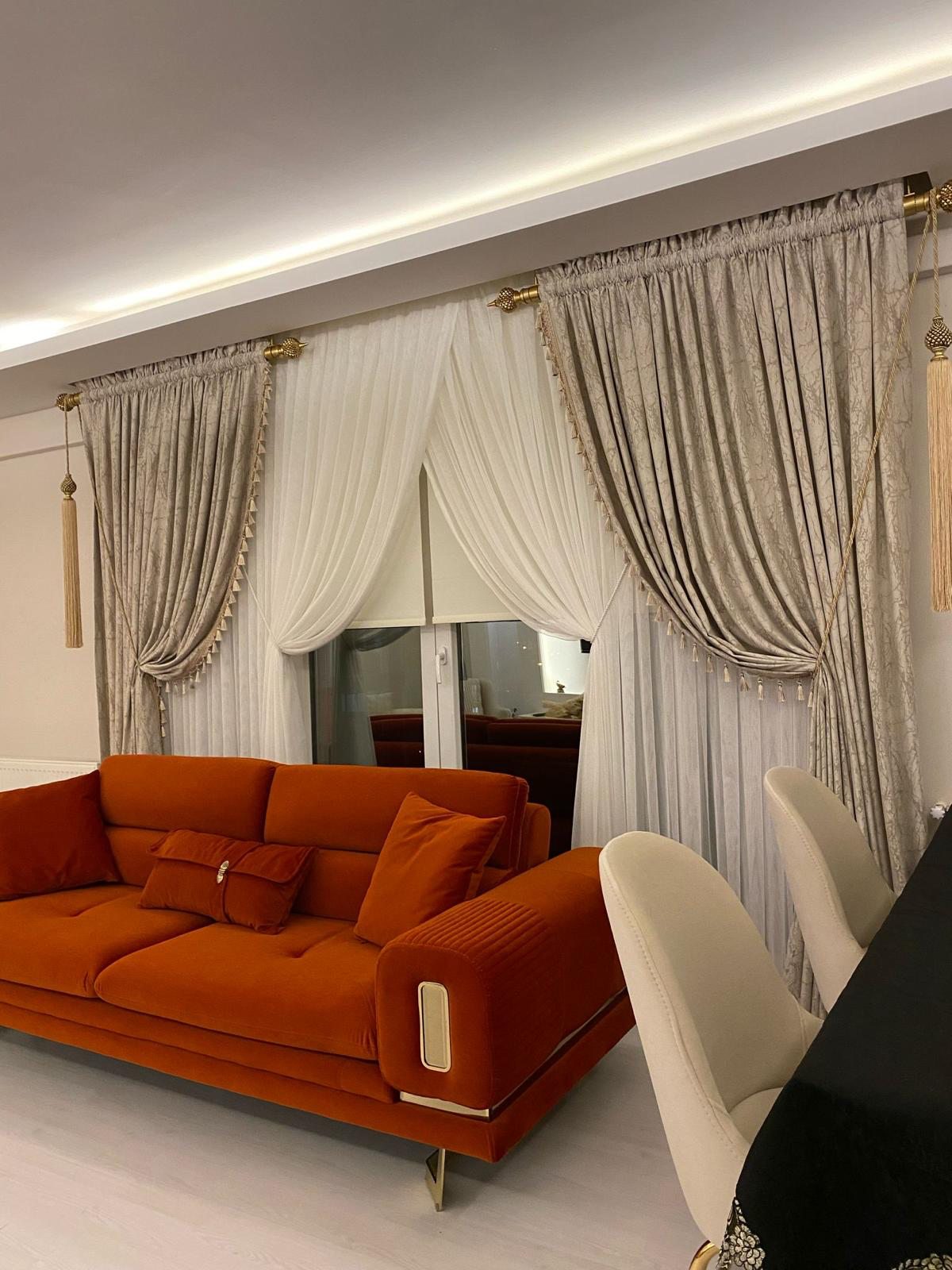
How Long Should Curtains Be?
In interior design, the question of where curtains should end is a fundamental factor that determines both the aesthetics and functionality of a space. It is a generally accepted rule that curtains should at least touch the floor or end just above it. Short curtains are generally best avoided, as they visually divide the wall, making the ceiling appear lower and the room seem smaller than it actually is.
However, the physical conditions of the space may necessitate a departure from this rule. For instance, in situations where there is a radiator beneath the window, the primary objective for a professional finish is for the curtain to blend seamlessly with the floor, thereby completing the room’s vertical line without interruption.
Aesthetic Principles Behind Floor to Ceiling Drapes in Dallas, Texas
Having curtains that extend from floor to ceiling is the most effective way to create an illusion of height and spaciousness in a room. The fundamental aesthetic principles behind this style are as follows:
High and wide installation:
To make a room appear larger, it is recommended that the curtain rod be mounted at least 4‘ (10 cm) above the window frame or, ideally, just 1″–2″ (2.5–5 cm) below the ceiling. Extending the rod so that it extends 8–12′ (20–30 cm) beyond the window frame on both sides makes the window appear wider than it actually is and allows more daylight to enter when the curtains are open.
Floor contact levels:
Kissing/touching: This style, where the curtain touches the floor completely, provides a classic and polished look.
Breaking/trouser break: By adding approximately 0.5‘ (1.5 cm) or 1’ (2.5 cm) to the hem length, the fabric is made to fold slightly on the floor; this creates a sophisticated, ‘tailor-made’ look.
Puddling: The fabric is allowed to form luxurious folds on the floor. For this dramatic effect, add 2‘–4’ (5–10 cm) to the floor measurement for a standard pile, or 5‘–8’ (12.7–20 cm) for a full ‘puddling’ effect.
The Maintenance Debate: Curtains Touching the Floor vs. Floating
Whilst having curtains touch the floor is an aesthetic choice, it is also crucial from a maintenance and practicality perspective.
The advantages of the ‘float’ (above the floor) style: Having the curtains finish approximately 0.4‘–0.8’ (1 cm–2 cm) or 1″ (2.5 cm) above the floor is a highly practical solution for modern and minimalist homes. This gap prevents the bottom of the curtains from collecting dust or getting stained or worn; it also allows the lower sections to be easily swept and vacuumed.
Mechanical safety: In motorised or corded blind systems, it is important that the fabric does not pile up on the floor. Keeping the blinds slightly above the floor prevents unnecessary strain from being placed on the motor or cords.
Fabric behavior: For models with sharp folds, such as S-Fold, it is particularly recommended that they remain approximately ‘0.4’–0.6′ (1–1.5 cm) above the floor to maintain their shape; otherwise, the fabric may crease on the floor and lose its wave structure.
The challenges of puddling: Whilst fabric gathered on the floor may create a romantic and cozy atmosphere, it tends to get dirty very quickly. For this reason, this style is not recommended for curtains that are opened and closed frequently on a daily basis, as it requires high maintenance. Users wishing to improve thermal insulation can compromise on aesthetics by ensuring the curtain ‘sits heavily’ on the floor with a gap of approximately ‘0.4’–0.8′ (10–20 mm).
Where Should Curtains Fall? Exploring Standard Lengths
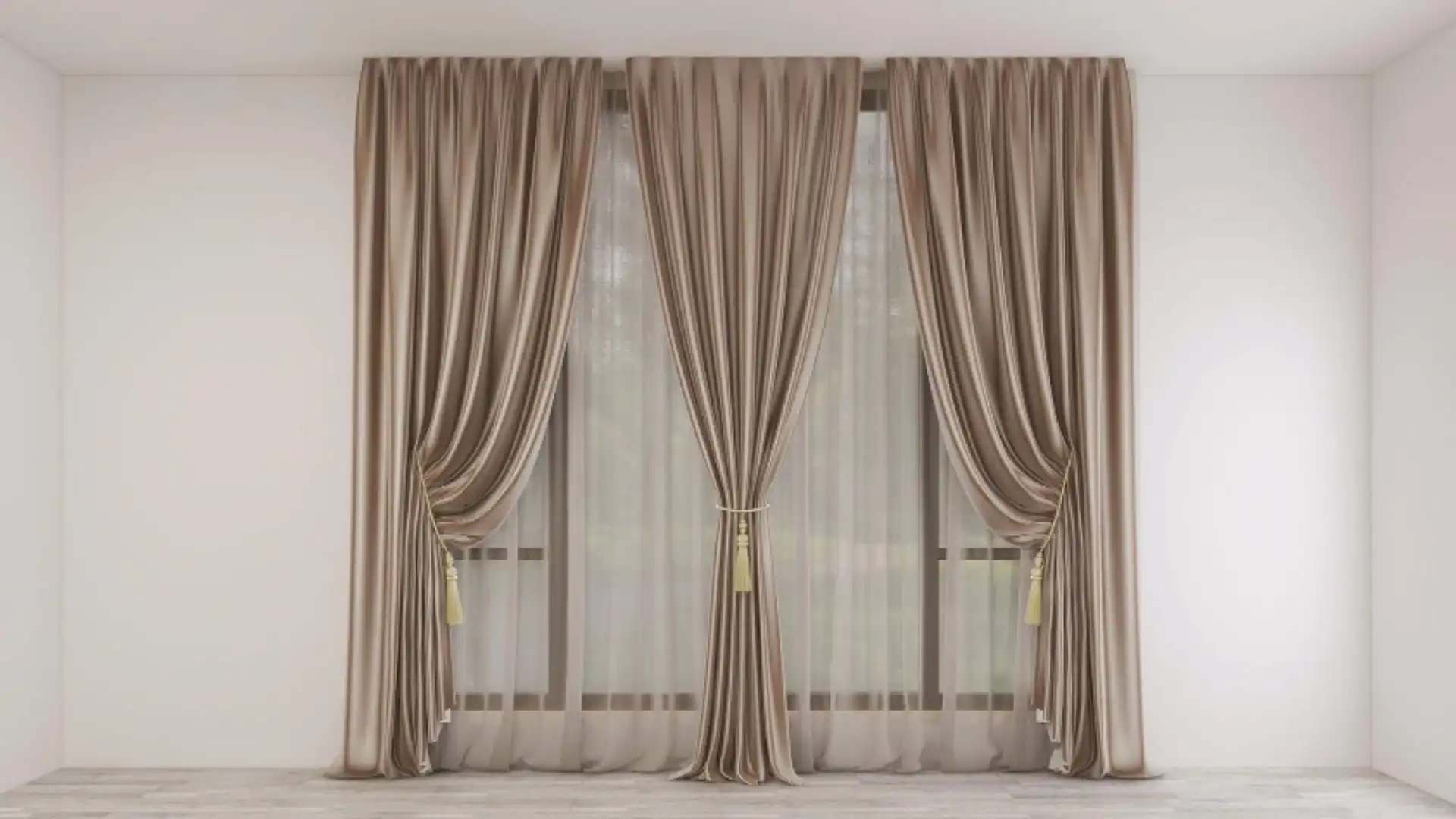
Choosing the length of curtains is a personal preference that can either complement or completely transform a room’s style; however, there are some established basic standards in interior design.
- Ideally, curtains should end either at the level of the window sill (sill length), just below the sill (below sill/apron), or right at floor level (floor length).
- As a general design rule, it is recommended that curtains end 0.5‘ (1.3 cm) above the windowsill or extend down to approximately 6’ (15.2 cm) below it, covering the sill.
- For floor-length curtains, having the fabric hang 1″ (2.5 cm) above the floor or rest directly on the floor creates a professional and cohesive look.
The Float: How Far Off the Floor Should Curtains Be?
- The ‘floating’ curtain style—where the curtains hang above the floor—is both a practical and aesthetic solution for modern and minimalist spaces. To achieve this look, it is recommended that the curtains end approximately 0.4‘ to 0.8’ (1 cm – 2 cm) above the floor, or exactly 1‘ (2.5 cm) for a more pronounced ’polished look.”
- The main advantage of this style is that it prevents the bottom sections of the curtains from collecting dust or becoming stained or worn; it also makes sweeping the floor or using a robot vacuum cleaner extremely easy. Particularly with modern curtains featuring sharp lines, such as S-Fold (Wave), it is generally recommended to leave a gap of between 0.4‘ and 0.6’ (1 cm – 1.5 cm) to ensure the folds remain neat and sharp without hitting the floor and becoming bent.
The Kiss: Should Drapes Touch the Ground Perfectly?
- In this style, known as ‘The Kiss’ or ‘Skimming’, the curtains either skim the floor completely or touch it lightly, lending the room a classic and polished finish. In this style, the curtains ‘kiss’ the floor perfectly without creating any fabric bunching.
- This style creates a flawless designer touch, particularly when used in living areas or bedrooms with neutral-toned linen-blend fabrics.
- If you wish for the fabric to have a slight ‘break’ (trouser break) on the floor, you can achieve a heavier, more dignified look by adding approximately 0.5‘ (1.5 cm) or 1’ (2.5 cm) to the floor measurement. This method is also a highly aesthetic way of concealing slight unevenness in the floor.
The Puddle: Should Curtains Puddle on the Floor?
Curtains that drape or pool on the floor instantly add a sense of luxury, warmth, and romance to a room. The preferred drape levels, indicating how much fabric gathers on the floor, are as follows:
- Standard drape: A style where approximately 2‘–4’ (5 cm–10 cm) of extra fabric falls lightly onto the floor.
- Full (true) drape: To create a more pronounced effect, the fabric is allowed to fan out across the floor, leaving a gap of 5‘–8′ (12.7 cm–20 cm) from the floor.
- Luxurious and dramatic drape: For very heavy fabrics (such as velvet) and opulent décor, this allowance can exceed 10″ (25 cm). This style is ideal for media rooms or luxurious bedrooms; however, as the lower sections may become soiled very quickly if the curtains are opened and closed daily, this style is generally intended for decorative rather than functional purposes.
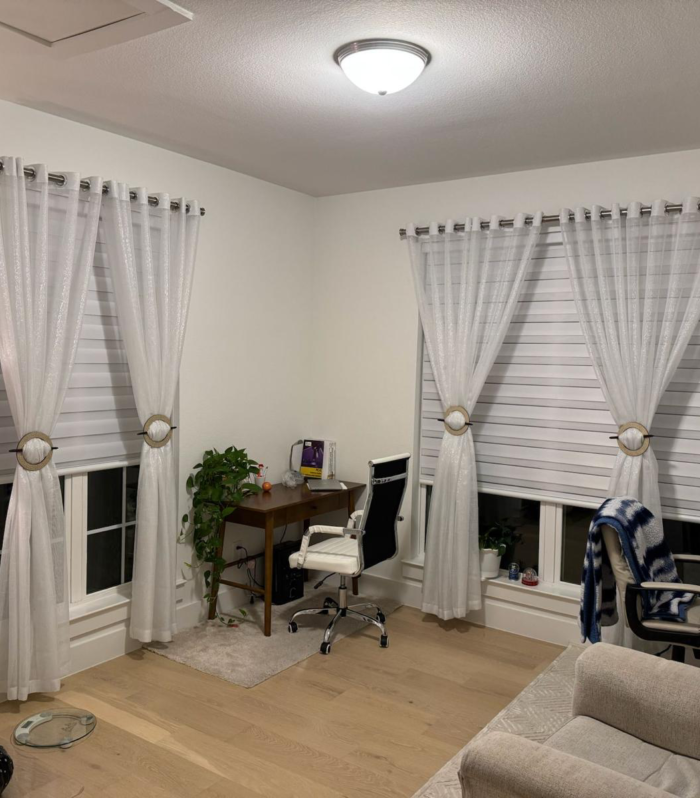
When Curtains Don’t Touch Floor: Sill and Apron Lengths
In some cases, it may not be possible or practical for curtains to reach the floor; in such cases, sill or apron lengths may be preferred.
- Sill length: Curtains are typically finished just above the window sill, usually 0.2‘ (0.5 cm) or 0.5’ (1.3 cm) higher. This style is ideal for areas with short windows, such as kitchens or bathrooms.
- Below Sill/Apron: In this style, where the curtain fully covers the windowsill and extends downwards, it is recommended to leave a gap of approximately 4‘–6′ (10 cm–15 cm) from the sill, or as a standard rule, 6‘ (15.2 cm) to 8’ (20 cm).
- Radiator clearance: If there is a radiator beneath the window, it is an important rule that the curtain should end at least 0.8‘–1.2’ (2 cm–3 cm) or, for safety, 2″ (5 cm) above the radiator to allow heat to circulate freely into the room.
Room-by-Room Curtain Length Rules in Dallas, Texas
As the intended use and decorative requirements of each room differ, the rules regarding curtain length also vary from room to room. As a general rule, it is recommended to avoid short curtains so that they do not visually divide the wall and make the space appear smaller and that the curtains should at least reach the floor. A choice should be made from among the three basic length standards—sill length, below-sill (apron) length, and floor length—depending on the room’s function.
Should Bedroom Curtains Touch the Floor?
In bedrooms, both aesthetics and functionality (particularly insulation and light control) take centre stage, which is why floor-length curtains are often preferred.
- For a classic and neat look, the ‘kissing’ or ‘touching’ style, where the curtains rest directly on the floor, lends bedrooms a stylish, designer-inspired feel.
- If you wish to achieve better thermal insulation and create a cosy atmosphere in the room, adding approximately 0.4‘–0.8′ (10–20 mm) to the curtain length ensures the fabric sits heavily on the floor.
- For a more romantic and luxurious atmosphere, standard pile heights of between 2‘ (5 cm) and 4’ (10 cm) can be used.
- In sleeping areas requiring complete blackout, the ‘float’ length—where the curtain ends just 0.4–0.6′ (1–1.5 cm) above the floor—is also highly practical for ensuring the fabric lies flat and for ease of cleaning.
Living Room Elegance: Are Drapes Supposed to Touch the Floor?
In living rooms, curtains are generally expected to touch the floor or drape slightly to create an air of elegance and sophistication. To make windows appear larger and ceilings higher, it is recommended that the curtain rod be mounted at least 4–6′ (10–15 cm) above the window frame and that the curtains be hung to reach the floor.
- ‘Floor-length’ curtains, particularly when used with linen-blend fabrics in neutral tones, offer a polished and low-maintenance professional finish in living areas.
- In modern and minimalist living rooms, it is ideal for curtains to hang approximately 0.4‘–0.8′ (1 cm–2 cm) above the floor to preserve the sharp folds of S-Fold (Wave) style curtains.
- In more formal settings or spaces such as media rooms, a ‘true puddle’ effect of between 5′ and 8’ (12.7–20 cm) allows the fabric to fan out luxuriously across the floor, adding depth and a dramatic atmosphere to the room.
Kitchens and Bathrooms: Do Curtains Have to Touch the Floor?
In damp or confined spaces such as kitchens and bathrooms, it is neither practical nor hygienic for curtains to touch the floor, so shorter lengths are generally preferred. As there may be obstacles such as worktops, sinks, or tiles immediately below the windows in these areas, the sill length is the most suitable solution; in this style, the curtains end approximately 0.2‘ (0.5 cm) or 0.6’ (1.5 cm) above the sill.
- If you wish to cover the sill beneath the window, you can opt for the ‘apron’ length, where the curtains extend down approximately 4–6′ (10–15 cm) or, as a standard rule, 8″ (20 cm) below the sill.
- In areas such as kitchens and bathrooms, using short models that end 1″ (2.5 cm) above the floor to prevent the bottom of the curtains from getting dirty is a professional approach in terms of ease of maintenance.
- It is important to remember that, particularly for recessed windows or tiled surfaces, the window recess must be at least 3″ (7.5 cm) deep to allow the curtains to move smoothly.

Commercial Spaces: Do Curtains Need to Touch the Floor in Offices?
In commercial spaces and office designs, the length of curtains is of strategic importance both for maintaining a professional image and for operational efficiency.
As a general design rule, it is recommended that curtains in offices do not touch the floor but instead finish approximately 0.4‘–0.8′ (1 cm–2 cm) above the floor. This ‘float’ length offers a modern and minimalist look whilst significantly simplifying cleaning and maintenance processes.
Due to the high footfall in offices, curtains dragging on the floor can cause the lower sections of the fabric to become dirty, stained, or worn out quickly. Furthermore, hanging the curtain rod as close to the ceiling as possible to allow the curtains to reach the floor makes the office ceilings appear higher and the workspace more spacious, thereby positively contributing to staff morale.
Professional Workplaces and Meeting Rooms
In professional workplaces and meeting rooms, the acoustic performance of curtains should be taken into account as much as their aesthetic appearance.
- In areas such as executive offices or formal boardrooms, a ‘kissing’ style, where the curtains touch the floor, or a ‘polished’ look, where they sit just 1″ (2.5 cm) above the floor, may be preferred to create a more formal and dignified atmosphere. As privacy and sound insulation are critical in these areas, full-length fabrics covering the windows reduce sound reflections, ensuring acoustic privacy.
- If the room features motorised curtain systems used for technological presentations, it is a technical requirement for the curtains to end 0.4‘–0.6′ (1 cm–1.5 cm) above the floor to reduce the strain on the motor and extend the mechanism’s lifespan. To prevent light leakage and maximise privacy, a professional tip is to ensure the curtain extends 8‘–12’ (20 cm–30 cm) beyond the wall on either side.
Industrial and Medical Facilities: Length of Drapes From Floor
Curtain length regulations in industrial facilities and medical settings are determined by strict hygiene and safety standards. In areas where sterilisation is a priority, such as hospitals, it is important to use short-length models to ensure that curtains do not come into contact with dust and bacteria on the floor.
- In such facilities, ‘sill length’ curtains that end 0.5‘ (1.3 cm) above the window sill, or ‘apron’ lengths extending 6’ (15.2 cm) to 8″ (20 cm) down to cover the sill, are generally preferred.
- In industrial settings, it is a safety protocol requirement that curtains end at least 2″ (5 cm) above the radiator to prevent them from becoming caught on moving equipment or radiators.
- To ensure that heavy-duty blackout fabrics remain properly hung and their lower sections do not wear out, it is standard practice in these areas to have the curtains finish at least 1″ (2.5 cm) above the floor.
Standard Length of Curtain and Sizing Metrics
Taking curtain measurements is one of the most technical yet equally aesthetic steps in completing a room’s design. To ensure a perfect fit, the measurement process should always begin with a metal tape measure, and measurements must be recorded with millimetre precision. The basic rule for sizing curtains is to use the ‘width x drop’ formula.
- The length of the curtain depends on the hardware it will be hung on (rail or rod) and where you want the curtain to end.
- As a standard practice, the curtain rod or rail is typically mounted 4‘ (10 cm) to 6’ (15 cm) above the window frame.
- Hanging the rod just 1‘–2’ (2.5 cm–5 cm) below the ceiling is a professional design trick to make the ceiling appear higher.
- Regarding the width measurement, having the fitting extend 6‘ (15.2 cm) to 12’ (30 cm) beyond each side of the window frame ensures that the glass is not completely covered when the curtains are open, making the windows appear larger.
Utilizing a Curtain Length Chart for Optimal Fit
Using a curtain length chart or guide helps you visualise how the curtains you have chosen will interact with the proportions of the room. Different ‘finish’ points are defined based on the curtains’ relationship to the floor, and the following standards are recommended for these points:
- Window sill (sill length): Curtains should finish exactly at the window sill or approximately 0.5” (1.3 cm) above the sill.
- Below the sill (apron): For a more traditional look, curtains can extend 4‘ (10 cm) to 6’ (15.2 cm) or, as a standard rule, up to 8″ (20 cm) below the sill.
- Floor length: For a professional finish, it is recommended that the curtains either touch the floor (kissing) or end 1″ (2.5 cm) above the floor (floating).
- Fullness: For an elegant look, the total fabric width should be at least 1.5 times the width of the window; for an ideal, full-bodied drape, 2–3 times the fabric width is recommended.
Understanding 84, 96, and 108-Inch Standards
Ready-made curtains are usually available in specific standard sizes, designed to fit the most common window and ceiling heights. Understanding these standards allows you to select the correct curtain without the need for alterations: The curtain header style you choose when taking measurements also affects the length; for example, with eyelet curtains, the measurement starts from the top of the rod, whereas with ring-top models, it starts from the hole below the ring
84″ (213 cm) standard:
This is the most common ready-made curtain length. It is typically designed so that, in rooms with standard ceiling heights, the curtain rod—when mounted just above the window frame—will reach or touch the floor.
95‘ / 96’ (241 / 244 cm) standard:
This length is ideal for those who wish to hang the curtain rod higher than the window frame (to create an illusion of height) whilst ensuring the curtains reach the floor. It is also used to create a slight break or puddling effect in rooms with lower ceilings.
108″ (274 cm) standard:
This is generally produced for homes with high ceilings or is preferred when curtains are required to extend from ceiling to floor. When used at standard heights, curtains of this length create a dramatic puddling effect on the floor, with the fabric pooling to a depth of approximately 5‘–8’ (12.7 cm–20 cm).
120″ (305 cm) and above:
Suitable for very tall windows or ultra-luxury interiors where the fabric is intended to fan out luxuriously on the floor, featuring a 10+” (25.4+ cm) puddling effect.
How to Measure Curtain Length
Measuring the length of a curtain correctly determines the entire atmosphere of a room, both in terms of functionality and aesthetics. An incorrect measurement can result in the curtain being either too short, making the room look cramped, or too long, giving it a shabby appearance. The first rule for a professional result is to always use a metal tape measure, as fabric tape measures can stretch over time.
Where you start the measurement depends on the hardware you will be hanging the curtain from:
- Curtain tracks: Start measuring from the top of the track and measure down to the point where you want the curtain to end.
- Poles with rings: The measurement is taken from the eyelet below the ring (where the hook is attached) downwards.
- Eyelet curtains: For these models, the measurement starts from the very top of the pole; as the fabric will hang over the top of the pole, an extra 1.2″ (3 cm) is usually added automatically.
Perdenin nerede bitmesi gerektiğine karar verirken şu standartlar baz alınır:
- Window Sill Length: Typically preferred in areas such as kitchens, it ends either directly on the sill or 0.2″ (0.5 cm) above it.
- Below Sill / Apron: Extends downwards to cover the sill, typically by approximately 4‘–6’ (10–15 cm) or, as a standard rule, 6‘–8’ (15–20 cm).
- Floor Length: For a modern and minimalist look, it is recommended that the curtain end 0.4‘ (1 cm) to 0.6’ (1.5 cm) above the floor, whilst in classic décor, it should skim the floor.
- Puddling: For a romantic and luxurious look, an extra 2‘–4’ (5–10 cm) is added after the hem reaches the floor; for a more dramatic effect, an extra 5‘–8’ (12.7–20 cm) is added.
Hardware Placement and the 84-Inch Curtain Rod Factor
The positioning of the curtain hardware (rail or rod) is based on the ‘high and wide’ design principle, which determines how high the ceiling and how large the window will appear. It is recommended that the curtain rod be mounted at least 4‘ (10 cm) to 6’ (15 cm) above the window frame. Those wishing to make the ceiling appear much higher can maximise the vertical line by hanging the rod just 1‘–2’ (2.5–5 cm) below the ceiling.
The 84-inch (213 cm) curtain rod and panel standard is the most common measurement in the ready-made curtain industry. This measurement is important because:
- Standard ready-made panels measuring 84″ (213 cm) in length are generally designed to reach or touch the floor when the curtain rod is mounted directly above the window frame.
- If you wish to create an illusion of height by hanging the curtain rod higher, you should opt for standard lengths such as ’95’/96′ (241/244 cm) or 108″ (274 cm) for higher ceilings.
- Extending the curtain rod 8‘–12’ (20–30 cm) beyond each side of the window prevents the fabric from covering the glass when the curtains are open, allowing more light into the room and making the window appear larger than it actually is.
Calculating Width and Fabric Fullness for Curtains on a Window
When calculating the width required to ensure your curtains look stylish and full, you should base your measurements on the width of the curtain rail or rod, not the window itself. To ensure a proper fit, the total curtain width should be at least 1.5 times the width of the rail or rod. At the end of your calculation, it is a professional requirement to add an ‘overlap’ of between 2‘ and 8’ (5–20 cm) in total to prevent any light leakage that may occur in the centre or at the edges when the curtains are closed and to enhance privacy. For example, for a 60‘ (152.4 cm) wide window, if you want a fully full look, you will need approximately 180’ (457.2 cm) of fabric plus additional allowances to cover any light gaps.
The fullness ratios according to your desired look are as follows:
- Tailored (sleek) look: For modern and minimalist spaces, use one time the width of the window in fabric.
- Standard fullness: Ideal for most homes, this style uses two times the width.
- Full (Luxury) Fullness: For heavier pleats and a more opulent look, the width is maintained between 2.5 and 3 times the width.
Frequently Asked Questions
Should drapes touch the floor?
For a professional and stylish look, it is recommended that curtains either touch the floor or skim it lightly. Also known as ‘kissing the floor’, this style provides a neat, finished designer touch in living areas and bedrooms. If a heavier drape and thermal insulation are desired, the curtain can be made to ‘sit heavy’ with a 0.4–0.8 inch (1 cm–2 cm) allowance from the floor.
Should curtains go to the floor?
Yes, having curtains that extend from floor to ceiling is an aesthetic necessity that adds height and a sense of spaciousness to a room. Short curtains should be avoided, as they visually cut off the wall, making the room feel smaller and more cramped than it actually is. Mounting the curtain rod at least 4‘–6’ (10 cm–15 cm) above the window frame and letting the fabric hang all the way to the floor makes the ceiling appear higher.
Do curtains have to touch the floor?
Curtains do not necessarily have to touch the floor; in modern and minimalist homes, the ‘float’ style—where curtains hang slightly above the floor—is often preferred. In this style, curtains end approximately 0.4‘–0.8’ (1 cm–2 cm) or, according to some standards, 1″ (2.5 cm) above the floor. To ensure that models with sharp folds, such as the S-Fold (Wave), retain their shape and the fabric does not crease on the floor, it is technically recommended that they hang 0.4‘–0.6’ (1 cm–1.5 cm) above the floor.
Should your curtains touch the floor in a small room?
To make a small room appear more spacious and with higher ceilings, it is very important that the curtains either touch the floor or end just 0.4″ (1 cm) above it. Hanging the curtain rod as close to the ceiling as possible to ensure the fabric forms a continuous vertical line draws the eye upwards, thereby visually enlarging the room’s dimensions.
How far should curtains be off the floor to prevent dust collection?
To prevent dust accumulation and to stop the bottom edges of the curtains from becoming worn or stained, it is best to keep the curtains 0.4‘–0.8’ (1 cm–2 cm) or approximately 1″ (2.5 cm) above the floor. This gap makes it easier to sweep, vacuum, or use a robot vacuum cleaner underneath the curtains, making the maintenance process more practical.